
Dothistroma Needle Blight: The Quiet Threat to our Pine Forests
If you manage a mixed rural estate or historic woodland in the north of Scotland, you are already acutely aware that biosecurity is no longer just a buzzword; it’s a financial reality. But while much of the focus remains on the high profile devastation of Phytophthora ramorum in larch, there is a quieter, equally destructive pathogen actively reducing timber yields and threatening the structural integrity of our native woodlands: Dothistroma Needle Blight (DNB).
DNB, also known as Red Band Needle Blight, is a fungal pathogen that has firmly established itself across the North East and the Highlands. It is ruthless in its efficiency, and if left unchecked, it doesn’t just strip a tree of its aesthetic value it strips an estate of its commercial yield.
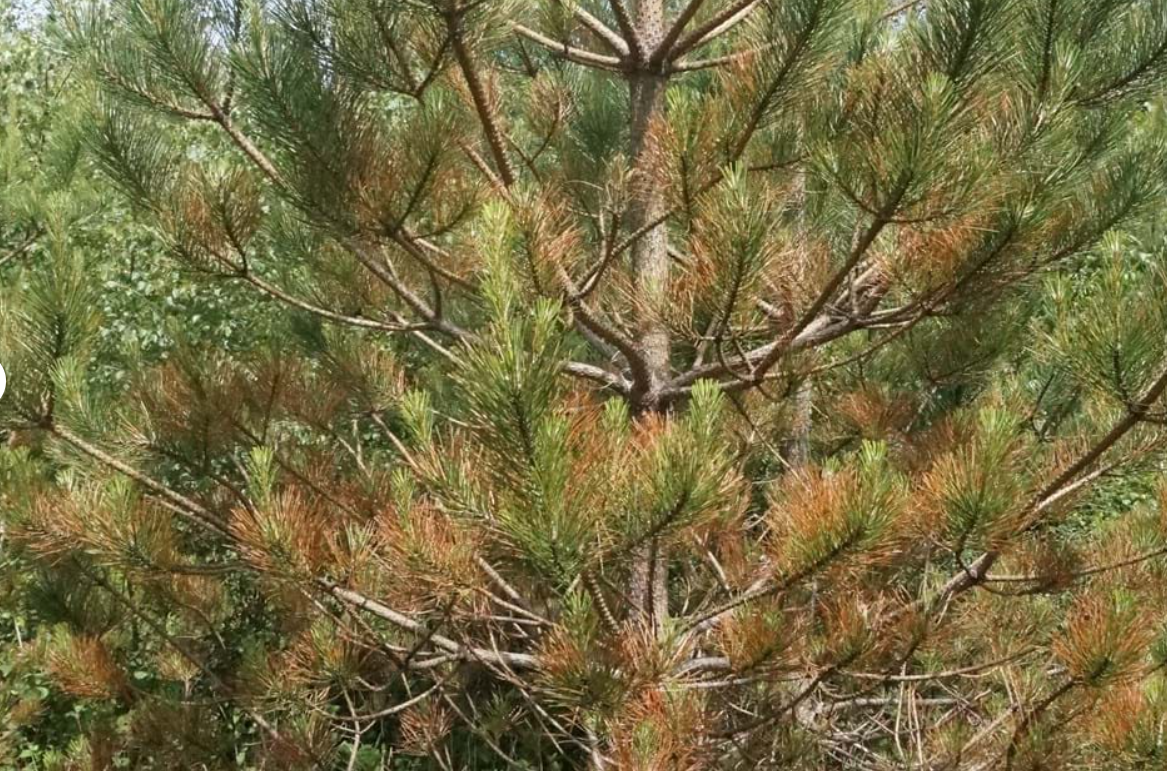
Credit Forest Research
The Hierarchy of Susceptibility
The reality of DNB is that it preys on planting decisions made decades ago. If your estate relies heavily on Corsican Pine (Pinus nigra) or inland origins of Lodgepole Pine (Pinus contorta), you are dealing with highly susceptible hosts. The mortality rates in these species have been so severe that planting them on the national forest estate is essentially a thing of the past.
However, the real threat to historic and mixed use estates lies in the spill over. Historically, our native Scots Pine (Pinus sylvestris) was considered relatively resilient. But the sheer volume of fungal spores generated by dying commercial plantations has overwhelmed those natural defences. Now, Scots Pine the backbone of many Caledonian pinewoods and historic designed landscapes is increasingly falling victim to the blight.
Recognising the Threat (Before It’s Too Late)
The symptoms are distinct if you know what to look for, but they are easily missed until the infection is advanced. The fungus causes distinct brick-red bands to form on the green needles, often containing tiny black fruiting bodies. The ends of the infected needles die off, while the base remains green.
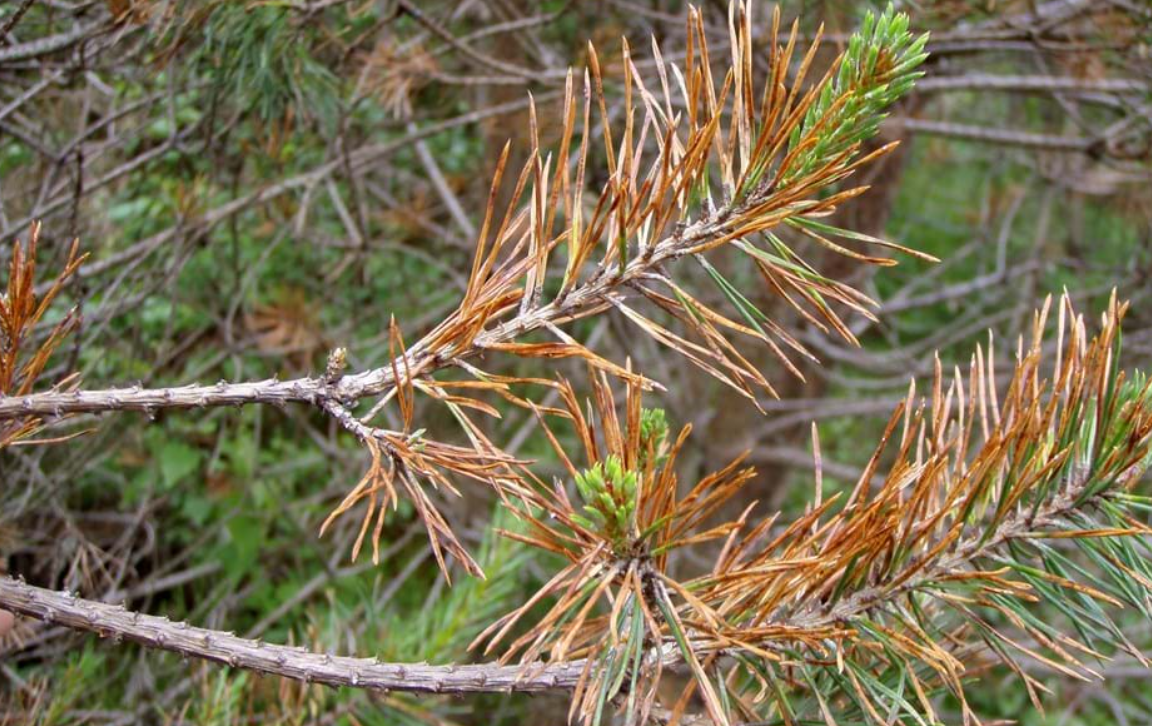
Credit Forest Research
Because the fungus requires moisture to spread its spores, the infection almost always begins in the humid microclimate of the lower crown and works its way up. Eventually, trees exhibit a "lion’s tail" effect, bare branches with only a small tuft of new growth clinging to the very tips.
By the time you can easily see this defoliation from a Land Rover on a forest track, the tree’s ability to photosynthesise has been drastically compromised. Growth rings narrow, timber quality plummets, and the commercial value of the crop is severely impacted.
Why Silviculture is Your Best Defence
When dealing with DNB, you cannot rely on chemical intervention. Aerial fungicide spraying is heavily restricted and generally impractical for mixed use estates. The only effective, long term weapon we have is strategic silviculture.
The fungus thrives in dense, un-thinned plantations where humidity is high and airflow is poor. Managing the disease is entirely about managing that microclimate:
Early, Heavy Thinning: Opening up the canopy increases airflow, allowing the needles to dry out faster and significantly reducing the spore load within the compartment.
Strategic Underplanting: Estates can no longer rely on pine monocultures. Underplanting infected or vulnerable stands with shade tolerant alternative conifers or native broadleaves breaks the continuity of the host species. It limits the spread of the pathogen and ensures that, even if the pine ultimately fails, the estate retains a viable canopy and future timber revenue.
The Diagnostic Advantage
For managing agents and estate trustees, the challenge isn’t knowing that DNB exists; it’s identifying exactly where it is taking hold across hundreds of acres of difficult terrain.
This is where objective, tech driven triage becomes invaluable. By utilising drone canopy mapping, we can identify those early-stage infection pockets spotting the thinning crowns and stress patterns from above long before they are glaringly obvious from the ground.
It moves estate management away from expensive, reactive felling, and towards proactive silvicultural intervention. By mapping the vulnerability early, we can implement the thinning and underplanting strategies required to protect the timber yield, preserve the historic landscape, and secure the estate's long-term assets.
If you have concerns about the health of your pine woodlands or require an objective biosecurity audit of your estate, get in touch to discuss how drone diagnostics can protect your portfolio.