
Seeing the Problem Before You Know Its Name
Plant health does not always begin with a diagnosis. More often, it begins with someone noticing that something is not right, before there is a name to put to it.
Some years ago, on an estate where I worked, I was walking the grounds with an arboriculturist we had brought in for tree work. We stopped at a mature common lime, one of the parkland limes planted through the middle of the nineteenth century.
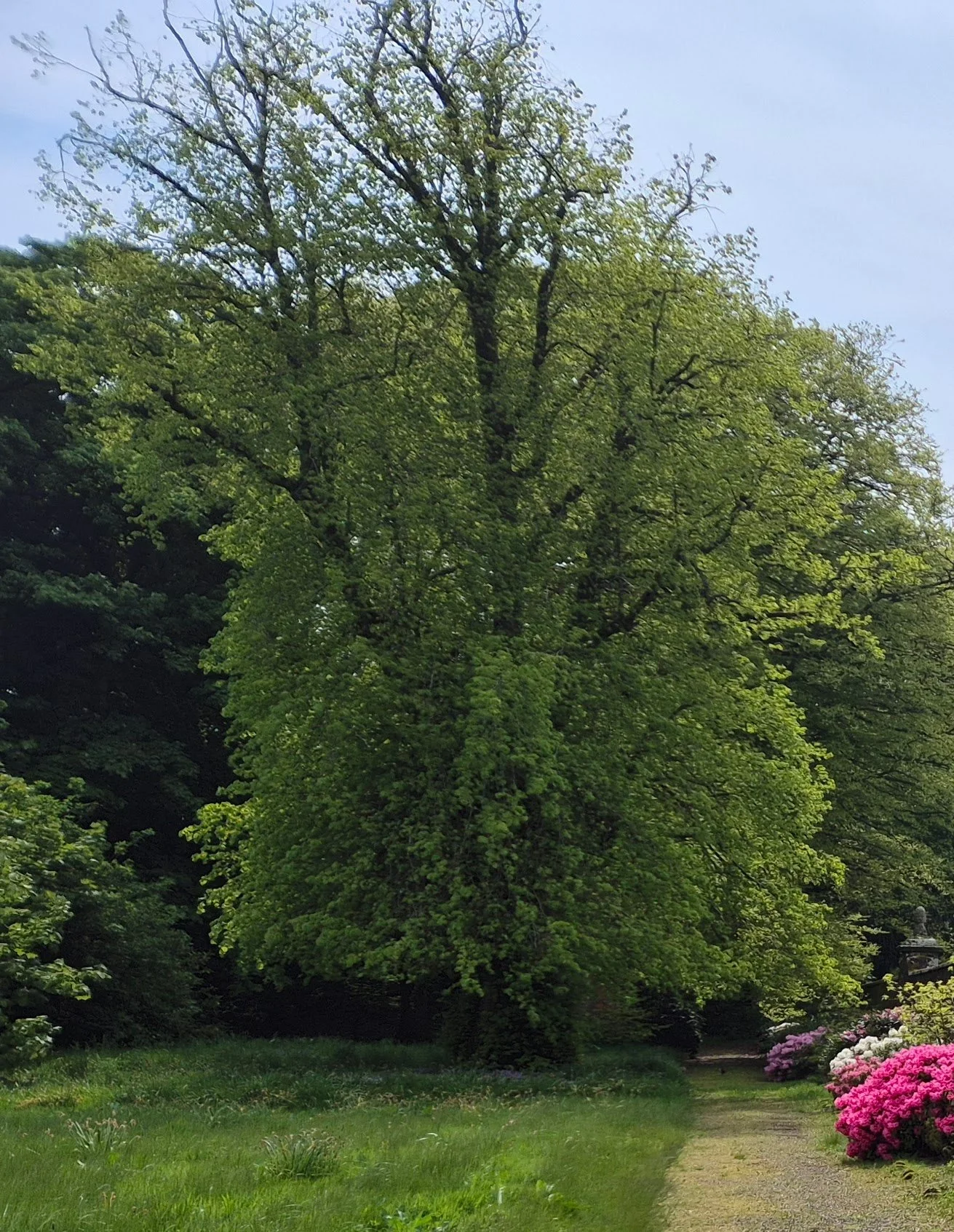
Mature common Lime Tree looking in good health
To my eye, and probably to most eyes, it looked in fine health. A full crown. No obvious wounds, no significant dieback, nothing that immediately suggested anything was wrong.
He crouched at the base and pointed to the fruiting bodies forming there.
Kretzschmaria deusta.
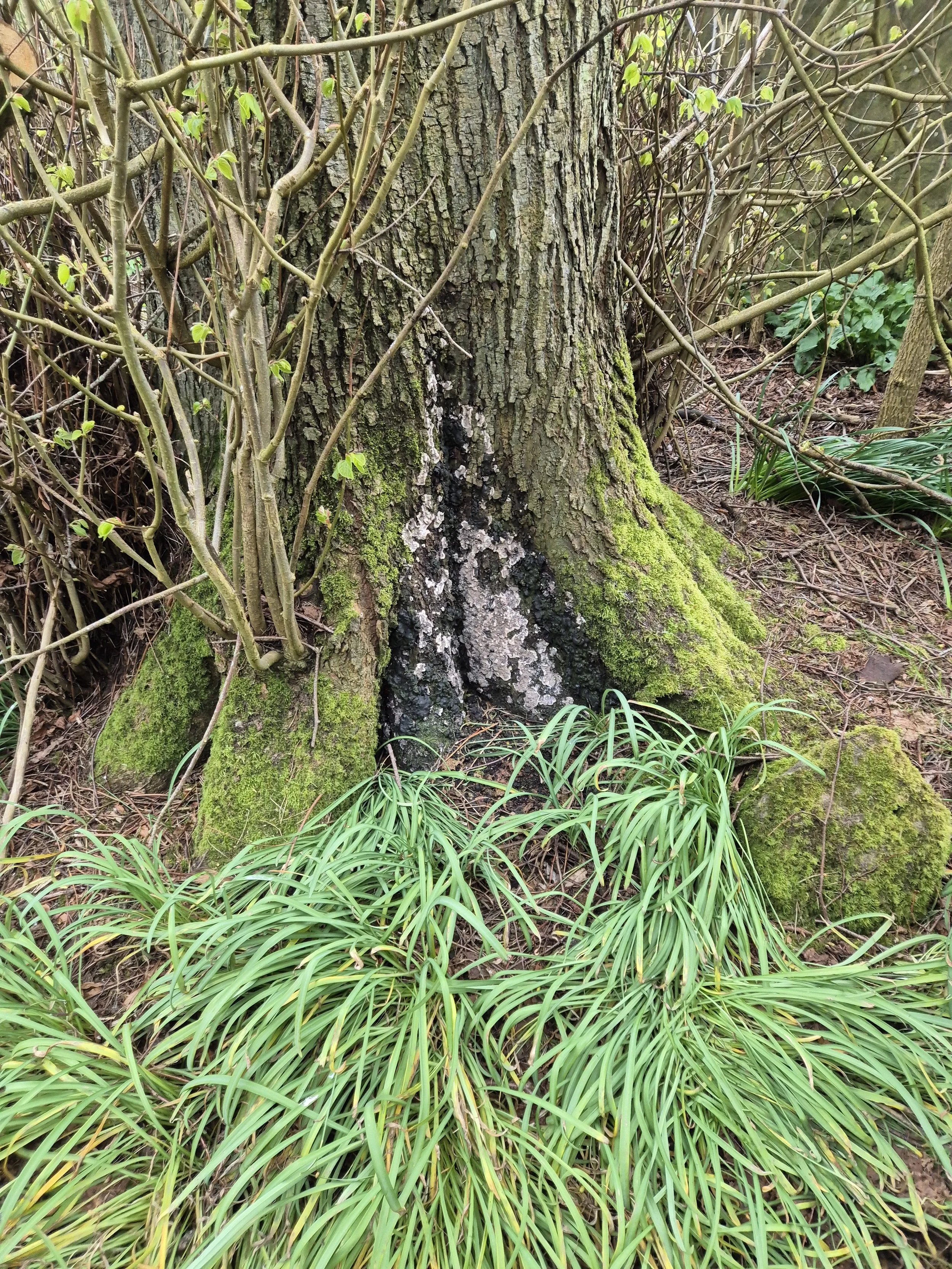
Kretzschmaria deusta fruiting bodies at base of lime
A fungus associated with serious decay of the roots and butt of a tree, while the crown above can continue looking remarkably healthy. He showed me what to look for: the brittle, crusted growths low on the trunk, and what their presence could mean.
Mature common lime has another habit that makes this sort of thing particularly easy to miss. Left unchecked, it can sucker heavily around the base, creating a dense screen of growth around exactly the area where signs of basal decay may appear. Keeping the root collar and lower trunk visible is therefore more than cosmetic maintenance; it allows the tree itself to be read.
The warning was at the bottom of the tree, whatever the canopy above was telling us.
That lesson stayed with me.
The tree was lying about its condition.
Everything obvious said healthy. The truth was contained in a sign barely the size of a hand, and it took someone who knew what he was looking at to read it.
We took the lime down that October.
Once felled, the base told the rest of the story. Where there should have been sound timber was extensive soft, dark decay and a substantial hollow through the base, just as those small fruiting bodies had warned.
Only a few feet away stood a wall built in 1690.
The consequences of basal failure in a tree of that size were therefore more than theoretical. A large tree failing from a compromised base does not necessarily fall neatly into an empty patch of ground. Historic structures, paths, neighbouring trees and people can all sit within its potential failure zone.
In this case, recognising a small sign at the base of an apparently healthy tree allowed the risk to be understood before the tree decided the matter for us.
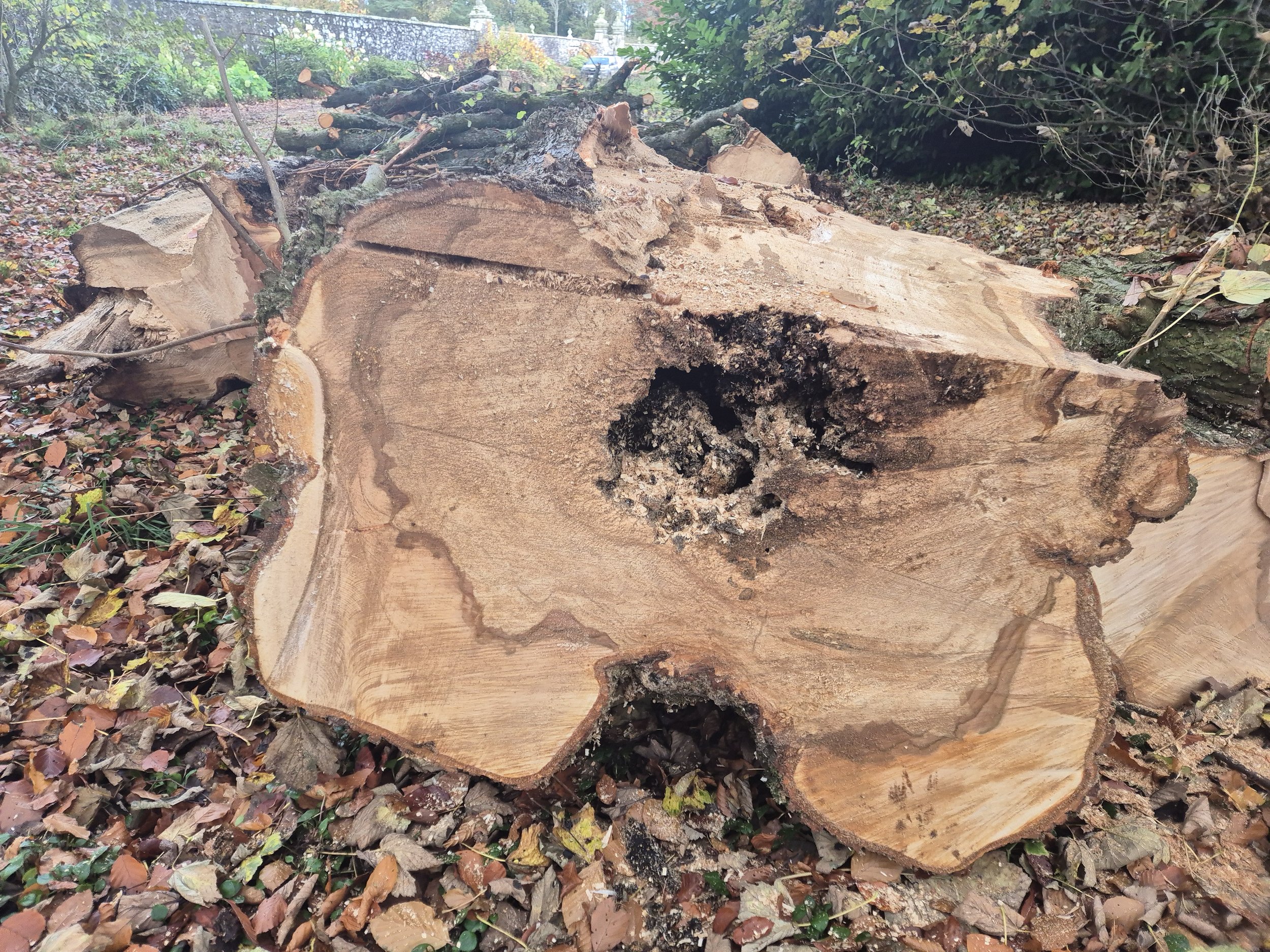
Felled lime tree showing decay from Kretzschmaria deusta
I think about that lime whenever people ask what a plant health assessment actually is, or why field observation matters when a laboratory may ultimately be where a pathogen is confirmed.
A laboratory may name or confirm the thing.
But someone has to find it first.
Someone has to notice that a pattern is wrong, understand the field context, judge whether it matters, and know when closer inspection or sampling is warranted. The definitive name may come later.
That is much of the real work of plant health, and it is quieter than it sounds.
A patch of crowns thinning where the others are not. An unusual distribution of symptoms. A change in a collection that was stable last year. Disease appearing along a route used by machinery or people.
None of these arrives with a label attached.
They arrive as an indication that something is off, and the skill lies in taking that indication seriously and then working methodically towards understanding what it means.
Observation. Pattern. Distribution. Risk. Targeted inspection. Sampling and diagnosis where required. Then a decision about what to do.
That sequence can turn an estate, a plant collection or thousands of hectares of woodland from something impossible to inspect indiscriminately into a focused investigation.
And sometimes the most important observation is remarkably small.
The lime taught me to look at the bottom of the tree, not just the top. More than that, it taught me that some of the most important work in plant health happens before anyone knows the name of the problem at all.
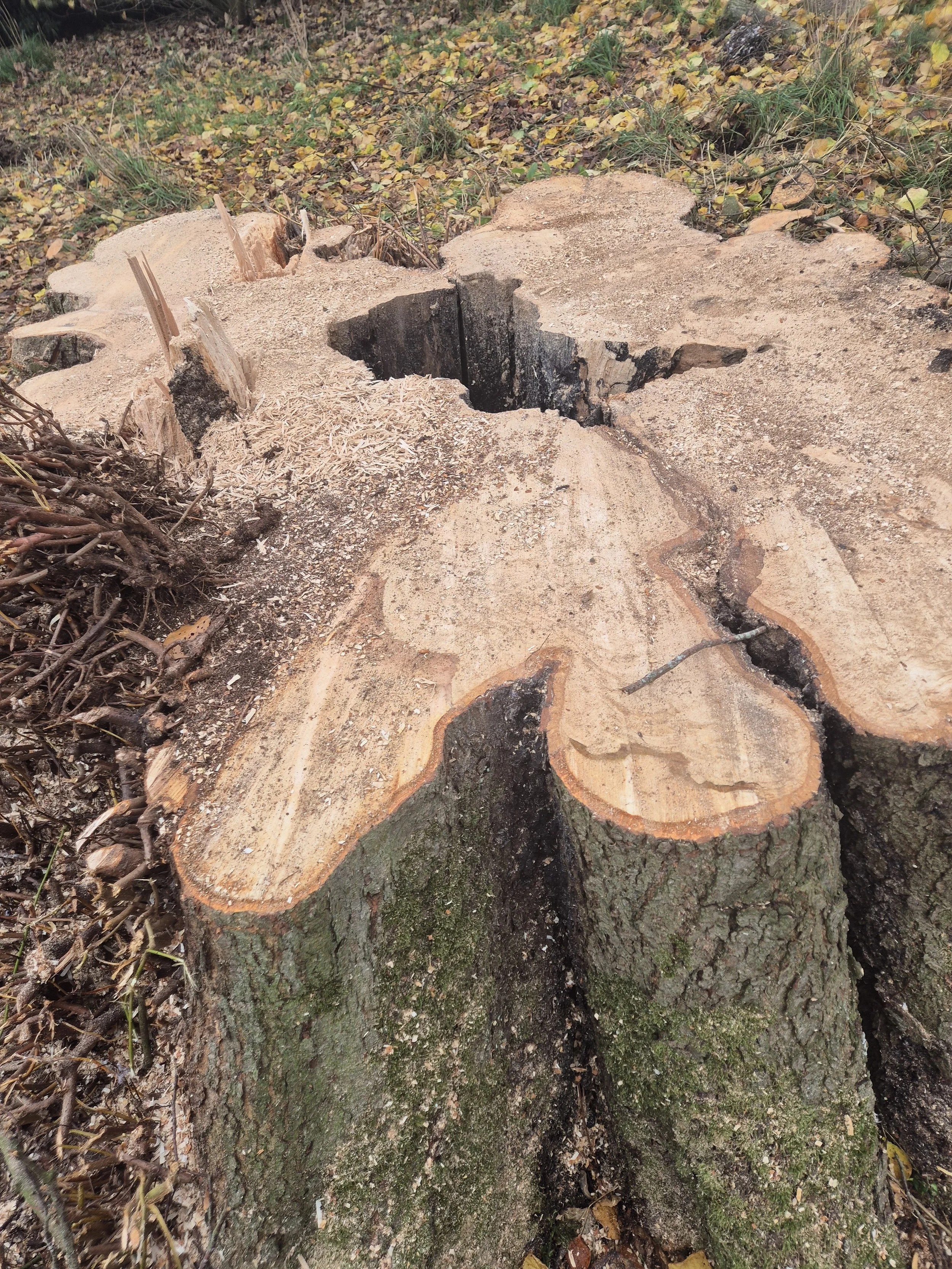
Felled Lime stump showing decay